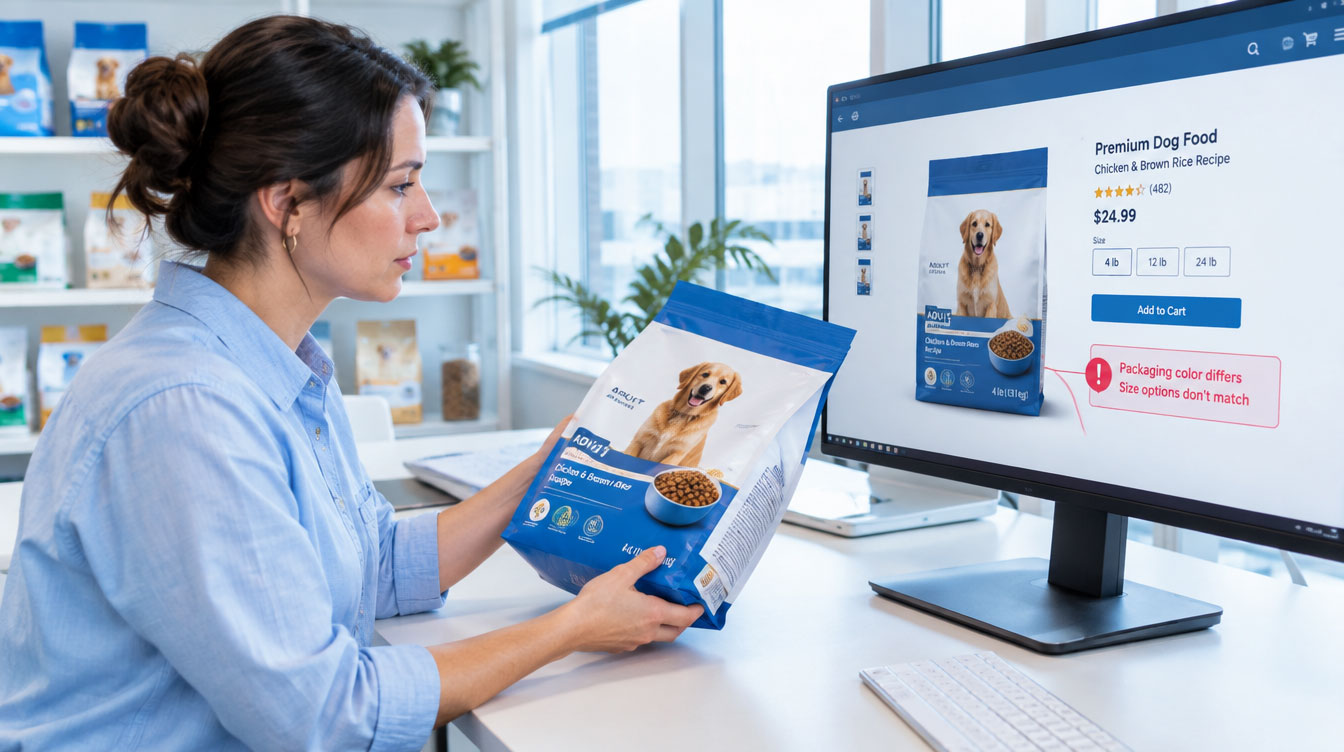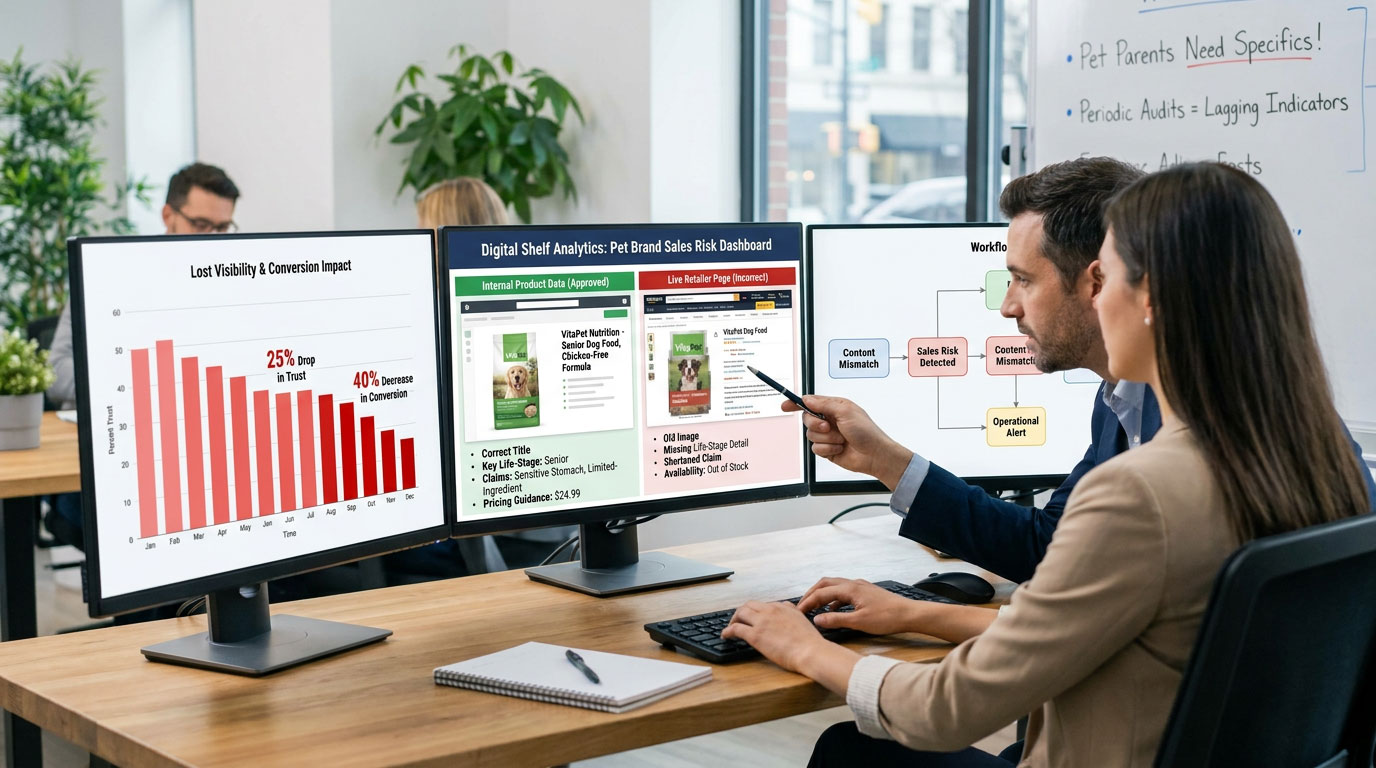


A brand approves "Made in the USA with imported ingredients." On a retailer page, the final three words disappear. Elsewhere, a benefit supported for one recipe appears above a selector covering several recipes.
These illustrative situations expose the same problem: approving copy does not establish what a shopper understands from its published presentation.
If the brand puts the approved claim beside the live page does the whole presentation stay within the product scope, qualifications, and evidence your team reviewed?
Can unchanged wording communicate a different claim?
Yes. Headings, images, comparisons, and placement can alter the message even when the sentence matches.
FTC policy requires prior support for objective advertising claims, including reasonable implied interpretations.[1] Its guidance evaluates the overall impression created by the advertisement's elements.[2]
For example, placing a product-only statement beneath "Why we're better" beside alternatives may imply comparative superiority. Reviewers need to assess that comparison, rather than simply confirm the sentence was approved.
The Product Truth Gap therefore includes context. Text matching can identify changes, but cannot establish that an unchanged claim retains its original scope.
Does internal approval establish substantiation?
No. Approval records a decision; substantiation is the evidence supporting the message. The published execution must stay within that support.
A study of one formulation does not automatically establish a benefit for every recipe on a shared page. Record the covered product, population, conditions, comparison basis, required qualification, and evidence version.
FDA identifies disease-related representations as potentially indicating an intended animal-drug use.[3] A retailer edit that turns a benefit into a treatment promise warrants specialist assessment. A discrepancy flag is not itself a legal conclusion.
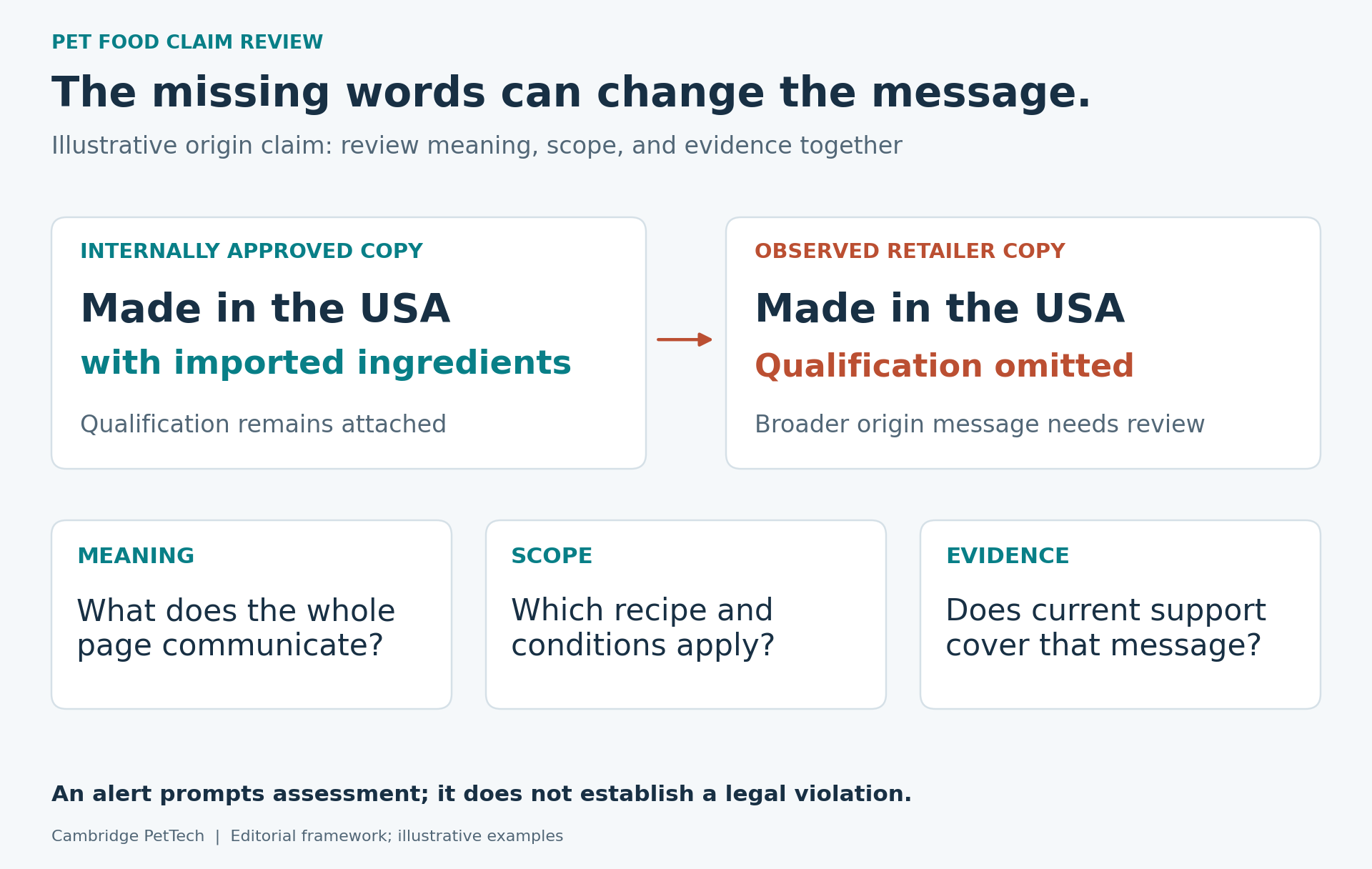
Original infographic: An illustrative framework, not measured customer results.
Which changes should a claim review inspect?
Inspect qualifications, product applicability, comparison scope, and visual implications. Preserve the page context a shopper can encounter.
Illustrative retailer-page review
A 15 lb bag, a multipack, and a subscription offer are different comparison contexts. Preserve seller, quantity, conditions, date, and calculation basis when assessing a savings claim.
Inspect the selected variant and surrounding imagery. A cropped sentence can conceal either a qualification that resolves ambiguity or a heading that introduces a new implication.
Can a footnote fix a broader headline?
A disclosure may clarify a claim, but cannot contradict its main message or replace adequate evidence.[2]
FTC's online guidance recommends putting relevant limitations into the claim where practical.[4] Keep necessary qualifications close to the claim and check their visibility after publication, including mobile presentation.
For the opening example, an unqualified Made in USA claim faces a different standard from a qualified origin claim. FTC guidance considers domestic processing and sourcing and calls for reassessment when circumstances change.[5]
A supplier change can therefore trigger review even if the retailer wording remains untouched. Accurate texts from last year may no longer have current support.
What should the claim record contain?
Connect each observed execution to its approved scope, evidence reference, and page capture. A list of approved sentences is insufficient.
Retain product and claim identifiers, seller, URL, selected variant, page section, capture time, extracted wording, original images, and approval version. Add the reviewer's interpretation and disposition.
Define whether monitoring covers bullets, image galleries, enhanced content, video, or customer contributions. Record failed access and incomplete extraction as unverified. Do not infer that a claim is absent because its component was not captured.
The brand or parent website supplies the retailer-comparison baseline; controlled records hold substantiation. Package InteliX's claims and packaging review supports assessment against source inputs and preserves approval context. Our article on packaging compliance reviews explains that upstream discipline.
What happens when formulation or customer feedback changes?
Reassess the affected claim against current product evidence, and investigate feedback without assuming causation.
FormuLogic's formulation scenario analysis helps teams examine ingredient and nutritional trade-offs. A released reformulation should trigger review of claims whose support depends on the previous recipe. Nutritional feasibility alone does not substantiate every marketing benefit.
BrandEQ's consumer-feedback analysis can surface recurring questions or concerns that guide investigation. A complaint is a signal to examine alongside the listing and evidence; it does not prove the page caused the experience. Our pet brand monitoring article explores this feedback context.
Who owns correction, and what closes the issue?
Regulatory or legal reviewers assess meaning and support; brand and eCommerce teams coordinate changes and verify the published result.
Record whether the wording was brand-supplied, retailer-edited, or of uncertain origin. That history informs escalation without presuming responsibility from the visible page alone.
ShelfAnalytiX's digital shelf monitoring compares brand or parent-website listings with retailer pages and flags content and image discrepancies. Expert claim assessment remains a separate responsibility.
After a correction request, recheck the affected variant, bullet, and image. Keep unresolved components open. Digital Shelf Surveillance supplies these observations; Continuous Digital Compliance adds assessment and follow-through.
Report verified coverage, unresolved material issues, and elapsed time to verified correction. At the next approval review, bring the live retailer presentation too. Ask whether the evidence supports the message that page communicates.
Sources and notes
Primary sources checked September 10, 2026. Examples and workflows are illustrative. U.S. regulatory context. Product links describe capabilities, not automatic integrations or compliance guarantees.